November can be a tough month.
The clocks have gone back, the days are shorter, the weather's getting worse and that enthusiasm we had during the summer feels like a distant memory. For some people, it's simply another month. For others, it's when everything starts to feel a little heavier.
Work pressures, financial worries, family responsibilities, relationships, health challenges. Life doesn't suddenly become easier just because we're tired or because we've got enough on our plates already.
And sometimes, despite doing everything right, life will still knock you sideways.
I've experienced that firsthand.
One of the biggest lessons I've learned over the years is that you don't build resilience by avoiding difficult situations. You build it by learning how to handle them.
The hard days are coming whether we like it or not.
The question is, are you preparing yourself for them?
You Can't Always Choose Your Battles
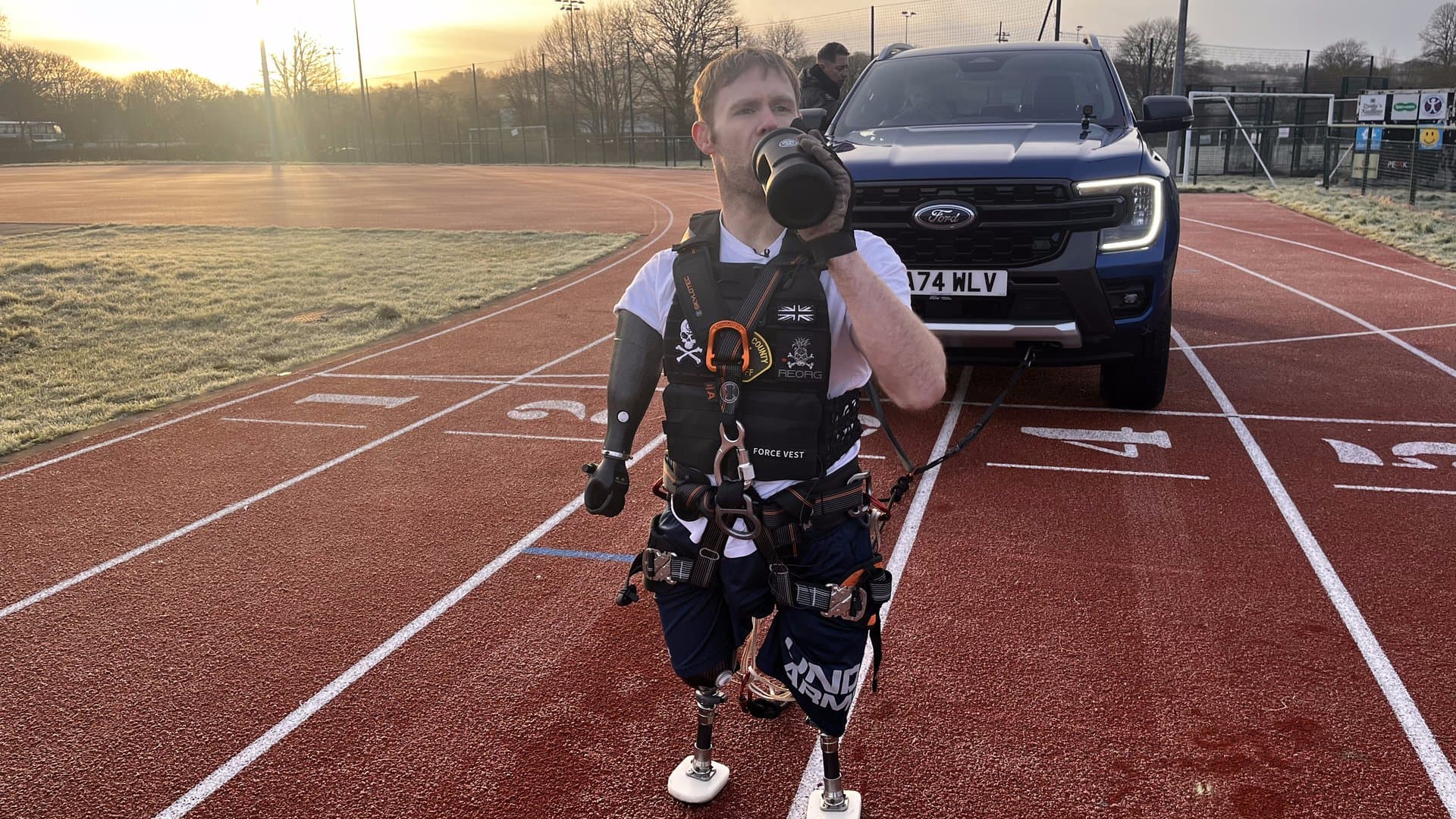
On Christmas Eve 2007, my life changed in an instant when I stepped on an IED in Afghanistan, losing both my legs and my right arm.
There was no preparation for that particular moment. No warning. No opportunity to make a different decision.
Suddenly, everything I knew about my life had changed.
During my recovery, there were plenty of difficult days. Physical pain, frustration, uncertainty and moments when the future looked completely different from anything I'd imagined.
I couldn't control what had happened, but eventually I had to decide how I was going to respond.
That didn't mean every day was positive. It didn't mean I was constantly motivated or that I never struggled.
It meant accepting that some days were going to be harder than others, and finding a way to keep moving forward regardless.
That's something I've carried with me ever since.
Resilience Is Built Before You Need It
Something the Royal Marines taught me is that preparation matters.
You don't wait until you're in the middle of a difficult situation to start developing the skills you need to handle it.
You train beforehand.
You build habits, discipline, confidence and trust in your ability to deal with challenges.
Life works in much the same way.
If you only start working on your mindset when everything falls apart, you're already playing catch-up.
The daily habits you develop when life is going well help create the foundations you'll rely on when things get difficult.
Training regularly, looking after your health, keeping promises to yourself, maintaining strong relationships and learning to manage your emotions all contribute to that foundation.
None of these things makes you immune to adversity.
But they can make you better equipped to handle it.
Strength Doesn't Mean Struggling Alone
There's a misconception that being mentally strong means dealing with everything yourself.
I understand where that comes from, particularly having spent so much of my life in military environments where toughness and self-reliance are valued.
But some of the strongest people I've ever met are also the ones who know when to ask for help.
After my injuries, I had an incredible amount of support from medical professionals, family, friends and the people around me.
That support mattered.
And accepting it didn't make me any less determined to rebuild my life.
Resilience isn't about pretending you're fine when you're not. It's about recognising what you need to keep moving forward.
Sometimes that's discipline.
Sometimes it's rest.
Sometimes it's a difficult conversation with somebody you trust.
Being strong doesn't mean carrying everything alone.
Focus On Your Next Move
When life gets overwhelming, it's easy to look at everything that's going wrong and convince yourself the situation is impossible.
I've seen this repeatedly through coaching.
People become so focused on the size of the problem that they stop recognising the smaller things they can actually influence.
That's when I encourage them to simplify things.
What's the next move?
Not the next ten moves.
Not how you're going to solve every problem over the next six months.
Just the next one.
Maybe it's getting out for some exercise. Having a conversation you've been avoiding. Making an appointment. Sorting out your finances or simply getting back into a routine.
Small actions create momentum.
And momentum can make an enormous difference when you're feeling stuck.
Don't Let A Bad Day Become A Bad Month
We all have difficult days.
Days when nothing goes to plan, motivation disappears and even simple things feel like hard work.
That's normal.
The problem starts when we allow one difficult day to dictate everything that follows.
You miss a training session, so you write off the week.
You have a setback at work, so you start questioning everything.
Something goes wrong, so you convince yourself there's no point trying.
One bad day doesn't mean you're failing.
It means you're human.
Acknowledge it, learn what you can and give yourself the opportunity to start again tomorrow.
Resilience isn't about never getting knocked down.
It's about developing the ability to get back up.
Final Thoughts
As we head towards the end of another year, it's worth remembering that life won't always be comfortable.
There will be setbacks, disappointments, difficult conversations and moments when things feel heavier than you'd like.
You can't prepare for every challenge, and you certainly can't control everything that happens.
But you can build habits that support you, surround yourself with good people, take responsibility for your next move and develop the confidence that comes from overcoming difficult things.
You don't have to be at your best every single day.
You just have to keep giving yourself a chance to move forward.
The hard days don't have to define you. But how you respond to them can help shape the person you become.
Your move, what's one thing you can start doing today to make yourself stronger for the challenges ahead?